
The six marketing strategies that work best for CBD businesses are SEO and educational content, email and SMS marketing, influencer and affiliate partnerships, community and loyalty building, compliant paid and native advertising, and trust signals like lab results, reviews, and transparent branding. Each one works around the same problem: CBD brands face tight advertising and payment restrictions, so the channels you own and the trust you earn carry more weight than anything you can buy.
That’s the logic behind this list. We favored approaches that don’t depend on a single platform’s goodwill, that build repeat customers rather than one-off sales, and that can be run by a small team without a large budget. Paid advertising made the cut, but only in its careful, compliant form, and it sits fifth for a reason.
Each section below gives you practical steps to start, plus a compliance caution where one applies. Ad platforms, payment processors, and regulators change their rules often, and those rules vary by location. Treat anything here as a starting point and check current policies before you spend a dollar.
How These Six CBD Marketing Strategies Were Chosen
CBD brands can’t count on the usual playbook. Major ad platforms often limit or prohibit CBD promotion, and payment processors can be picky, so a strategy that looks great on paper can fall apart overnight. That’s why each of the six ideas here had to pass the same five tests:
- Compliance-friendly: it works within common advertising and health-claim restrictions.
- Budget-conscious: a small team can run it without an agency-sized spend.
- Measurable: you can track results and decide what to keep or cut.
- Trust-building: it gives cautious shoppers real reasons to believe your brand.
- Owned-channel focus: it relies on assets you control, like your website and customer list.
Strategies that depend entirely on a single platform’s goodwill didn’t make the cut. Neither did tactics that need a big budget before they show any return.
One caveat matters more than the rest. Rules vary by platform, region, and product type, and they change often. Before you launch anything below, check the current policies of every channel you plan to use, and consider a legal review of your copy. Treat this list as a framework for choosing smart channels, not a guarantee of what any platform will approve today.
1. SEO and Educational Content, Earn Traffic Without Relying on Ads
Organic search is the one channel CBD brands can lean on without worrying about an ad account getting shut down overnight. Because many ad platforms limit or ban CBD promotion, ranking in Google is how new customers actually find you, and the traffic keeps coming without a per-click bill.
Start with keyword research built around real questions. People search for things like “how to choose a CBD tincture,” “full-spectrum vs. isolate,” or “how much CBD is in a gummy.” Those phrases show up in tools like Search Console and keyword planners, and they make strong blog topics. Write informational posts that answer one question well, then link them to the matching category or product page so readers have a clear next step.
Your category and product pages deserve the same care. Use descriptive titles, unique copy for every product, plain-language ingredient and sourcing details, and clear usage information instead of recycled manufacturer text. Learning which Google SEO tools to use makes this much easier, since you can see which queries already bring visitors and which pages are close to ranking.
Don’t skip the technical basics. Fast page loads, mobile-friendly layouts, clean URLs, and structured data (product, review, and FAQ markup) help search engines understand and display your pages. Sloppy fundamentals are a common reason brands end up paying for SEO that doesn’t work.
Teams like I-SEO focus on exactly this mix of useful content and sound site structure, which is a sensible model to follow even if you handle it in-house.
2. Email and SMS Marketing, Own the Relationship With Your Customers
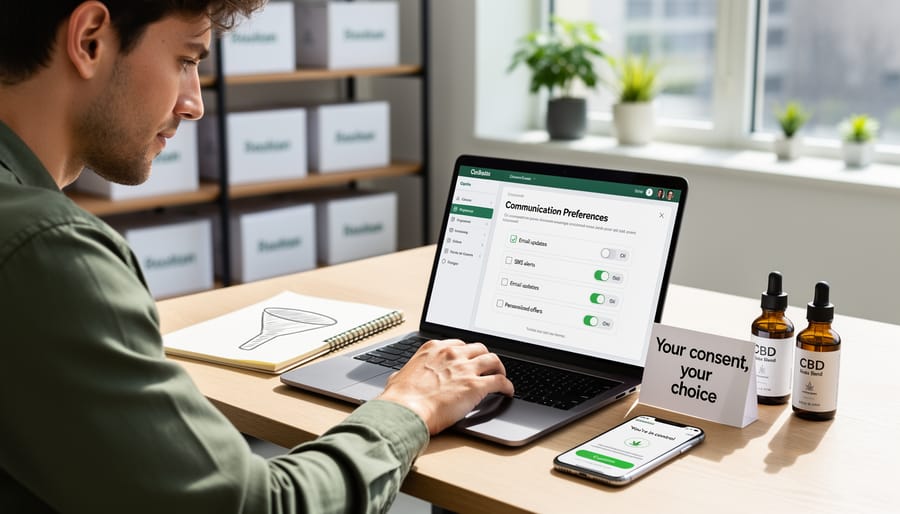
Social accounts get suspended. Ad platforms change their rules overnight. An email list sits on your own system, and no algorithm decides whether your customers see your message. For a CBD brand that can lose a channel without warning, that control is the whole point.
Start with a clear reason for people to subscribe. A modest first-order discount, a free dosage guide, or early access to new batches all work, as long as the offer matches what your shoppers care about. Place the signup form on your homepage, at checkout, and in a slim exit prompt, and keep the form short. An email address is usually enough.
Once someone joins, a welcome flow does the heavy lifting. Three or four messages spread over a week can introduce your brand story, explain how your products are sourced and tested, and answer common first-time questions. Then add replenishment reminders timed to how long a bottle typically lasts. These tend to bring back steady buyers without any ad spend.
Segment as soon as you have the data. Group subscribers by product interest, such as tinctures, topicals, or pet products, so each message feels relevant instead of generic. Browsing and purchase history make this easy to automate.
A note on compliance: collect explicit opt-in consent, especially for SMS, and include clear unsubscribe options in every message. Keep your list and messaging aimed at adults only, using age confirmation at signup where appropriate. Rules differ by country and state, and carriers and email providers may apply their own policies to CBD senders, so verify requirements before you send.
3. Influencer and Affiliate Partnerships, Borrow Trust From Credible Voices
Credibility is the hardest thing for a new CBD brand to buy, which is why other people’s voices matter so much. A creator or affiliate who already has a wellness audience’s attention can introduce your products in a way a banner never will.
Start with fit, not follower counts. Look for creators whose content already covers sleep, fitness recovery, or everyday wellbeing, and whose comments show real conversation rather than empty emoji. A smaller creator with a loyal niche audience often outperforms a celebrity with a vague one. Ask for audience demographics, and confirm they’re adults in places where your products can legally be sold.
Next, structure the program so everyone wins:
– Offer a percentage commission on each tracked sale, using unique links or discount codes.
– Add a modest bonus for hitting monthly sales milestones.
– Pay on a clear, predictable schedule, and put the terms in writing.
Then give partners a short content guide. Spell out what they can’t say, such as claiming a product treats, cures, or prevents any condition, and supply approved talking points about ingredients, lab testing, and how to use the product. Ask them to share only what they’ve personally experienced.
Disclosure is non-negotiable. Sponsored posts and affiliate links should be clearly labeled, using plain terms like “ad” or “paid partnership” near the top of the content. Consumer protection rules in many regions require this, so check the guidance that applies to you.
Imagine a small tincture brand that recruits a dozen sleep-focused creators and gives each a code. Within a quarter, a couple of them drive most of the sales, so the brand invests more in those relationships and drops the rest.
4. Community and Loyalty Building, Turn First-Time Buyers Into Regulars
Winning a customer once costs far more than keeping one. In a category where ad platforms limit your reach, every repeat purchase stretches your marketing budget further, because you’ve already paid to acquire that shopper. A returning buyer needs a reminder and a reason, not a full sales pitch.
Start with a simple points program. Reward purchases, reviews, and referrals so shoppers have a clear reason to come back. Keep the rules easy to explain in one sentence, or customers won’t bother.
Subscriptions work well for products people use daily, like tinctures or gummies. Offer a modest discount for subscribing, let customers skip or pause without friction, and send a heads-up before each shipment. Flexibility keeps cancellations low.
A private customer group, such as a members-only email list or a community page, gives loyal buyers a place to ask questions and swap routines. Moderate it lightly and remind members not to make medical claims. That protects them and you.
User-generated content is cheap social proof. Invite customers to share photos of how they fit your product into their day, and ask permission before reposting anything. Pair it with a referral reward so happy buyers bring friends: a small credit for both sides usually does the trick.
For a small team, pick one or two of these and run them well. Check results monthly, looking at repeat purchase rate and subscription retention, then add the next tactic once the first is running smoothly.
5. Compliant Paid and Native Advertising, Reach New Audiences Carefully
Paid advertising is the trickiest channel for CBD brands, so treat it as a careful supplement to your owned channels rather than the foundation. Major platforms often restrict or prohibit CBD ads, and the rules change frequently and differ by region. Before you spend anything, read the current advertising policy on each platform and confirm what is allowed for your product type.
Where ads are permitted, a few options tend to be worth exploring. Native ad networks place sponsored content alongside editorial articles, which suits educational CBD messaging well. Sponsored placements on wellness, lifestyle, and fitness publications put your brand in front of readers who are already curious about the category. Some ad platforms and marketplaces are built specifically for hemp and CBD businesses, and they can be a safer bet than mainstream networks. Ask each one directly about approved products and creative before you commit.
Start small. Set a modest test budget, run one or two campaigns, and judge them on cost per acquisition and return on ad spend instead of clicks alone. Use UTM parameters and conversion tracking so you can see which placements bring buyers and which only bring visitors.
Your landing page matters as much as the ad. Keep it policy-friendly by avoiding disease claims, cure language, and before-and-after promises. Lead with education, clear product details, and visible lab results. Make sure the page matches what the ad says, since mismatches are a common reason for rejections and account flags.
If a campaign is flagged, pause it, review the policy, and fix the issue rather than resubmitting the same creative.
6. Trust Signals, Lab Results, Reviews, and Transparent Branding

Shoppers in this category have been burned before by vague labels and inflated claims, so proof does more selling than any slogan. Third-party lab testing is the starting point. Publish the full certificate of analysis for each batch, not a cherry-picked summary, and add a QR code on the packaging that opens that exact certificate. It takes a customer about ten seconds to check, and that small act signals you have nothing to hide.
Pair the lab data with plain-language ingredient and sourcing details. Say where the hemp was grown, how it was extracted, and what each product contains per serving. On product pages, put the certificate link and a short “what’s inside” panel above the fold, then place verified reviews directly beneath the add-to-cart button. In email, pull one lab result or one review into each campaign so trust shows up at the moment of decision, not only on the site.
Reviews and testimonials work best when they’re specific and verified. Client testimonials deserve their own placement, whether on a dedicated page or woven into landing pages, because a named customer describing a real outcome carries weight that brand copy can’t. Keep every quote free of medical claims so the proof itself stays compliant.
Trust content also feeds your visibility. Pages with clear sourcing, structured reviews, and helpful detail tend to earn better engagement, which helps you avoid SEO mistakes like thin product pages. Combined with solid technical work, they can support the kind of ranking improvements that bring in qualified buyers.
Common Questions About Marketing a CBD Brand
Can CBD brands advertise on social media?
Organic posting is usually possible, but paid promotion of CBD products is often restricted or prohibited, and the rules differ by platform and region. Check each platform’s current advertising policy before you spend, and keep posts focused on education and brand story rather than health claims.
How much should a small CBD store budget for marketing?
There is no universal figure, since it depends on margins, goals, and team size. Many small stores start by funding owned channels like content and email first, then add paid tests in small, trackable amounts once they see what converts.
How long does SEO take to show results for a CBD site?
SEO is a gradual channel, and meaningful traffic typically builds over months rather than weeks. Results depend on competition, site quality, and how consistently you publish helpful content, so treat it as a long-term investment.
Do CBD brands need legal review of marketing copy?
It is a smart precaution, especially for product pages, ads, and anything that touches on health benefits. Regulations vary by location, so having a qualified professional review your claims can help you avoid costly takedowns or penalties.
The common thread across these answers is verification. Policies shift, so revisit them regularly and build your plan around channels you control, then layer in outside promotion as you confirm what is allowed.
CBD brands don’t need to outspend the competition to grow. They need channels they control and proof customers can see. Search content, email and SMS, creator partnerships, loyalty programs, careful paid placements, and visible lab results all work best when they reinforce each other, and they hold up even when an ad platform changes its rules overnight.
Before you add anything new, take stock of what you already have. Review your site’s top pages for clarity and compliant wording, check that your email welcome flow actually sends and converts, and confirm your lab results are easy to find on every product page. Fixing those gaps usually pays off faster than opening another channel, and it gives you a solid base for the five strategies above. Pick one weak spot this week and start there.